Is Co-Owning a House After Divorce a Good Idea?


Is co-owning a house after divorce a good idea?
Answer: Co-owning a home after divorce can provide stability for children and allow property appreciation, but it carries significant financial, legal, and personal risks. For most former spouses, establishing a clear exit timeline or choosing to sell home assets with local expert Stephen Weiler provides a cleaner financial break and long-term peace of mind.
Navigating property division during a divorce is often complex and emotional. Many parents consider co-owning their marital residence post-divorce to keep their children in familiar school districts like Farragut, Bearden, or Hardin Valley. While deferred sales or co-ownership agreements offer short-term stability, holding real estate jointly with a former spouse requires continuous communication, shared financial responsibility, and a bulletproof legal framework.
If you are evaluating whether to hold onto shared real estate or decide to sell home assets in Knox County, understanding the financial dynamics, legal liabilities, and local market realities is critical before making a final commitment.
1. Why Parents Consider Co-Owning Post-Divorce
Co-owning a home after a marital dissolution is most commonly motivated by family stability and market timing.
Emotional and Educational Continuity for Children
Moving during a major life transition can be tough on children. Remaining in the family home allows kids to stay in established neighborhood social circles and top-rated Knox County schools without interrupting their academic routines.
Delaying a Sale for Market Timing
If local interest rates are fluctuating or home equity is growing rapidly across the Greater Knoxville Area, former spouses sometimes agree to hold the home for a fixed period—such as two to five years—to maximize equity before putting the property on the market.
2. The Hidden Risks of Post-Divorce Property Co-Ownership
While the initial intent is usually grounded in family care, joint property ownership after divorce presents significant operational and financial liabilities.
Shared Mortgage Liability
Even if your divorce decree states that your ex-spouse is responsible for making monthly mortgage payments, mortgage lenders are not bound by divorce decrees. If your former partner misses a payment, your personal credit score will suffer, and the lender can hold both named parties liable for the outstanding debt.
Reduced Borrowing Capacity
Carrying joint debt on a primary residence impacts your debt-to-income (DTI) ratio. This shared liability can prevent you from qualifying for a mortgage on a new home or obtaining automobile loans and lines of credit in the future.
Disputes Over Maintenance and Repairs
Property upkeep requires ongoing investment. Disagreements frequently arise over routine maintenance cost sharing, emergency repairs (such as roof or HVAC replacements), and capital improvement decisions.
3. Comparing Post-Divorce Options: Co-Ownership vs. Clean Sale
To evaluate whether co-owning fits your financial strategy, compare the operational requirements of joint ownership against an immediate property sale:
|
Decision Factor |
Co-Owning Post-Divorce |
Immediate Sale & Division |
|
Financial Independence |
Linked to former spouse's credit and financial choices. |
Complete financial independence and clean separation. |
|
Child Stability |
Keeps children in current home and local school district. |
Requires transition to new housing, but establishes long-term routines. |
|
Lender & Legal Risks |
High liability if mortgage or property tax payments are missed. |
Zero ongoing property liabilities once the transaction closes. |
|
Equity Access |
Equity remains tied up in property until a future sale date. |
Immediate access to liquid net proceeds for down payments or savings. |
4. Key Protections Required If You Choose to Co-Own
If you and your former spouse decide that temporary co-ownership is the right path, you should establish a legally binding Marital Dissolution Agreement (MDA) or Co-Ownership Agreement drafted by a qualified attorney. This contract must explicitly define:
- Payment Allocation: Who pays the mortgage, property taxes, home insurance, HOA dues, and routine upkeep.
- Major Repair Thresholds: A set dollar amount (e.g., $500) requiring mutual approval for non-emergency repairs.
- Fixed Exit Strategy: A clear trigger event (such as a specific date, graduation year, or remarriage) forcing the sale of the home or a buyout.
- Buyout Terms: Clear guidelines for professional home appraisals and how equity will be calculated if one party buys out the other.
5. Local Real Estate Realities in the Greater Knoxville Area
Understanding local market metrics helps you decide whether holding or selling delivers a stronger financial outcome.
- Market Equity: Single-family home prices in Knox County have experienced steady equity growth, with median sale prices ranging between $400,000 and $425,000. Selling now allows both parties to capture accrued equity to fund separate living arrangements in communities like Powell, Fountain City, Karns, or South Knoxville.
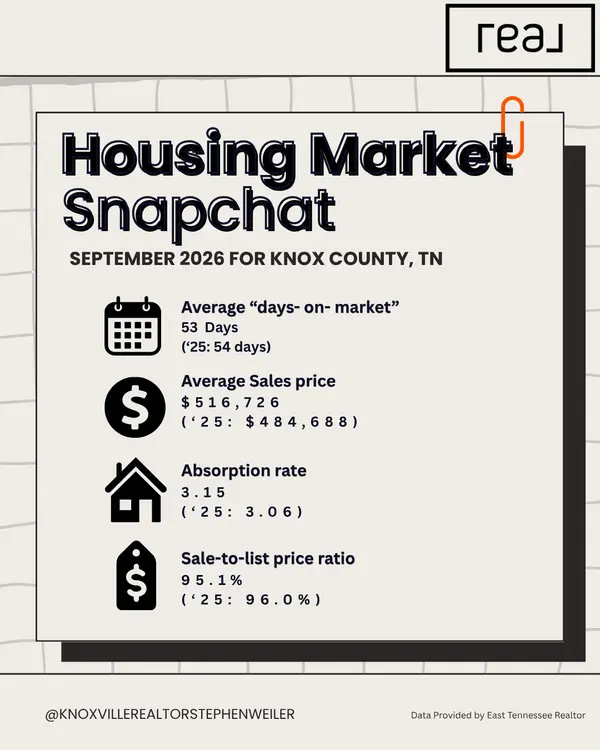
- Market Velocity: Well-maintained homes priced accurately in the Greater Knoxville Area average around 45 days on market, offering a timely transaction timeline for couples seeking a clean slate.
Partnering with experienced local real estate specialist Stephen Weiler ensures you receive an unbiased, professional Comparative Market Analysis (CMA). Stephen Weiler works with both parties and their legal counsel to provide objective home valuations, transparent communication, and comprehensive marketing strategies when the time comes to sell.
Important Legal and Financial Disclaimer
Property division and co-ownership agreements involve complex legal, tax, and financial considerations. While Stephen Weiler provides professional real estate valuation and market guidance in Knox County, readers should consult a licensed divorce attorney, family law practitioner, or certified public accountant (CPA) for specific advice regarding divorce decrees, legal liability, and tax consequences.
Conclusion and Next Steps
Co-owning a home after divorce can offer short-term stability, but it often creates ongoing financial ties and personal friction. Evaluating your home equity and exploring local housing options in Knox County gives you the clarity needed to make the right long-term choice for your family.
Considering selling your home or need an accurate property valuation in the Greater Knoxville Area? Contact Stephen Weiler of Real Broker today for a confidential, professional real estate consultation!
Categories
Recent Posts